 18+
18+
18+
18+
Free demo — no real money. Loads the provider's official demo build. Demos may be unavailable in some regions.
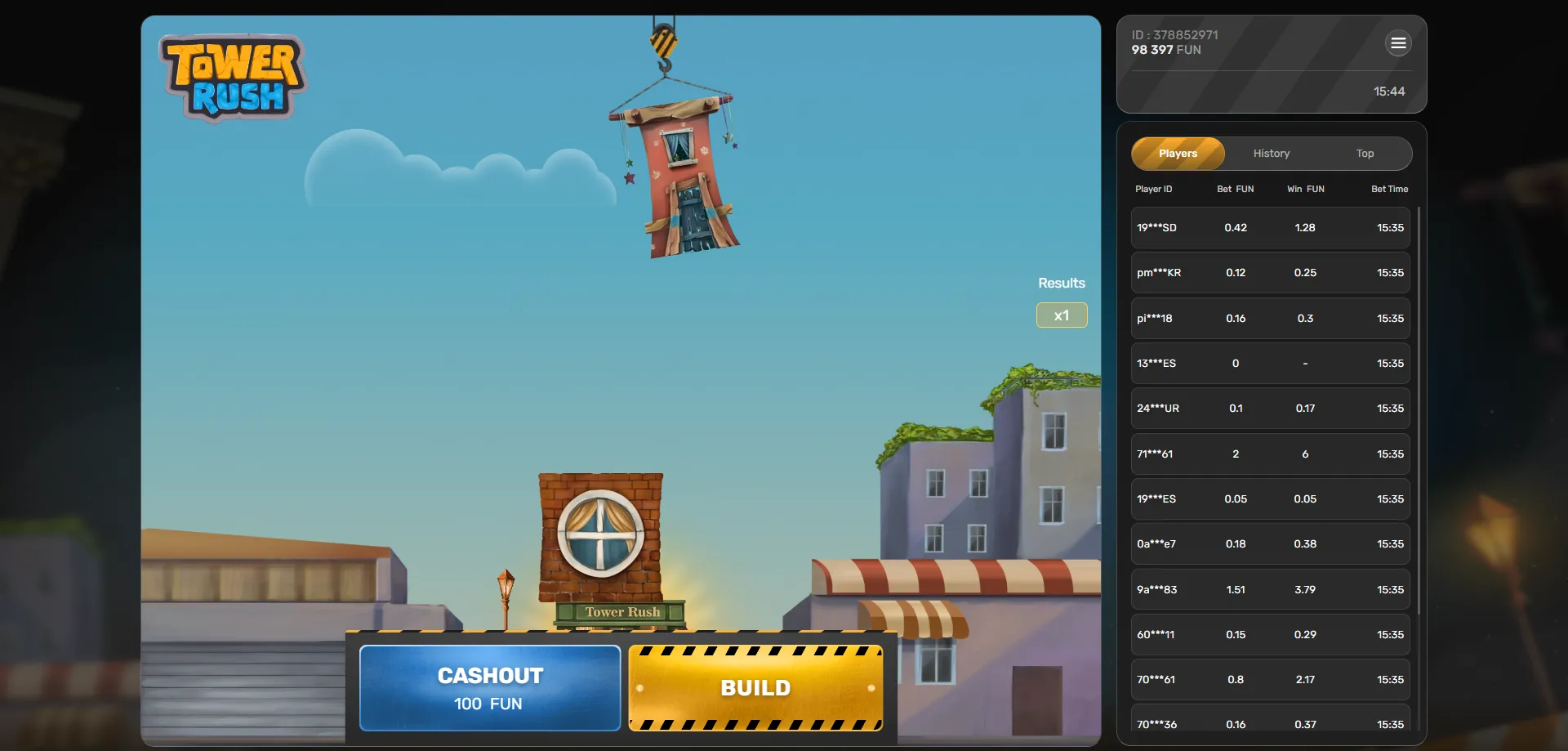
Before you place a single stake on Tower Rush, two figures shape every outcome you will ever see: the return-to-player (RTP) and the volatility rating. Tower Rush carries a published RTP of approximately 97% — well above the ~96% industry average for online slots — and sits firmly in the high-volatility bracket. In plain language, the game is designed to return a generous share of wagers over millions of rounds, but those returns arrive in unpredictable, often sharp bursts rather than in a smooth trickle of small wins. If you have five minutes and want the takeaway right now: a 97% RTP makes Tower Rush mathematically efficient, while high volatility means you must manage your bankroll carefully to survive the dry spells long enough to hit those meaningful cash-out points.
The sections below unpack every layer of that statement — how RTP is calculated, what volatility levels actually look like in practice, how to match both numbers to your session goals, and how Tower Rush's own tools help you make informed decisions before a single round begins.
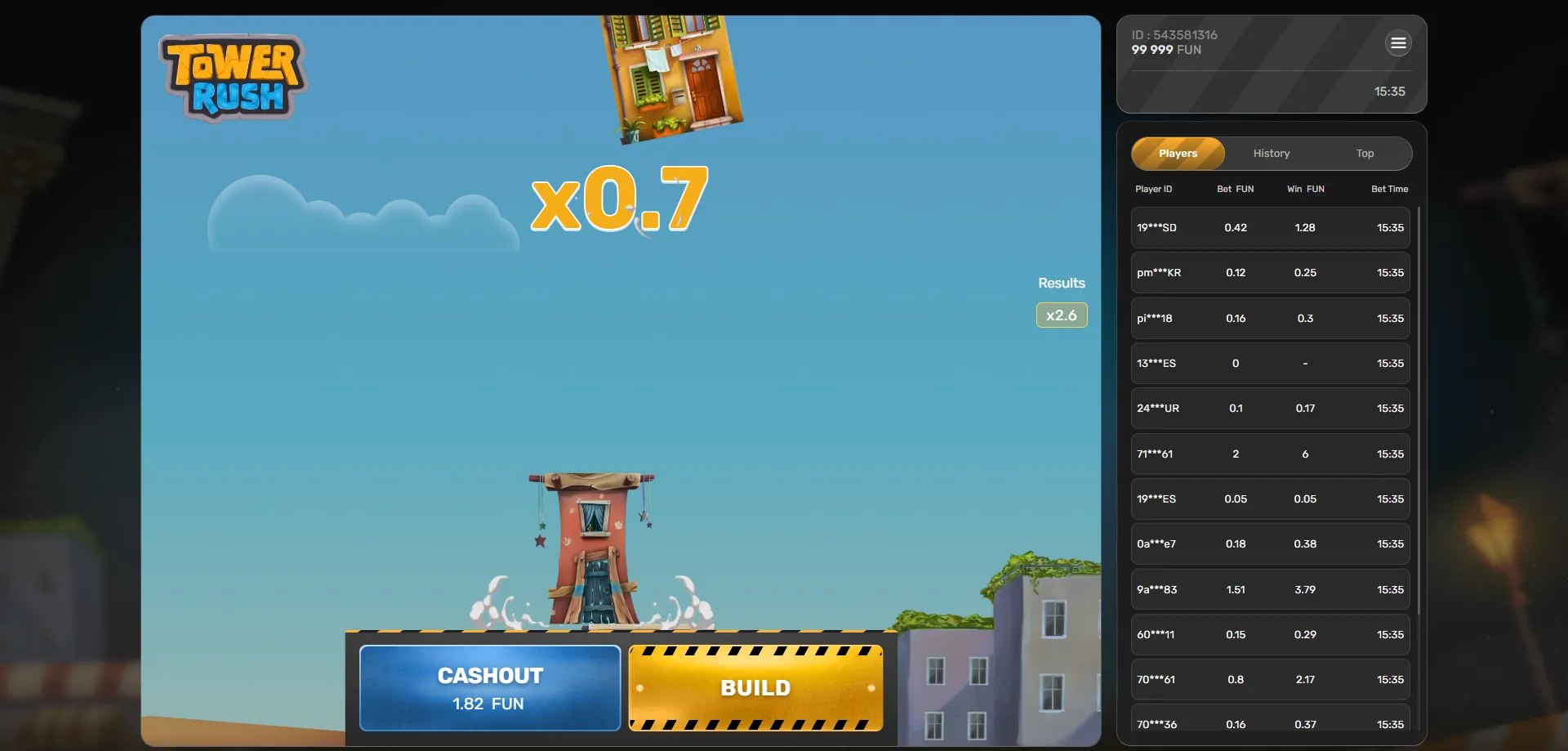
Return-to-player is a long-run statistical percentage. For Tower Rush, the figure of ~97% means that, across an enormous sample of rounds — think tens of millions — the game engine returns roughly ₹97 for every ₹100 wagered in aggregate. The remaining ₹3 represents the house edge built into the game's certified random number generator (RNG). Galaxsys, the developer behind Tower Rush, publishes this figure and allows operators to verify it independently through the game's provably fair cryptographic system.
The published 97% is a theoretical RTP — it describes the mathematical expectation of the algorithm, not what any individual player will experience in a single session. Your personal RTP in a given evening might be 40% if you cash out too early five rounds in a row, or 220% if you hit a high multiplier on your third round. The gap between theoretical and real-world RTP narrows only as the number of rounds you play approaches the statistical sample size used to derive the figure in the first place. That sample runs into the millions, which is far beyond any realistic playing session.
A common misreading of RTP leads players to expect roughly ₹97 back for every ₹100 wagered during a single session. This thinking ignores the law of large numbers. In Tower Rush, where the tower can collapse in the first second or climb to a 10× multiplier, individual round outcomes are highly dispersed. Over 100 rounds at a ₹50 stake, your actual return could range from near zero to several multiples of your starting budget. The 97% figure only becomes meaningful as a planning tool when you frame it as: over very long exposure, the game is more generous than most alternatives on the market.
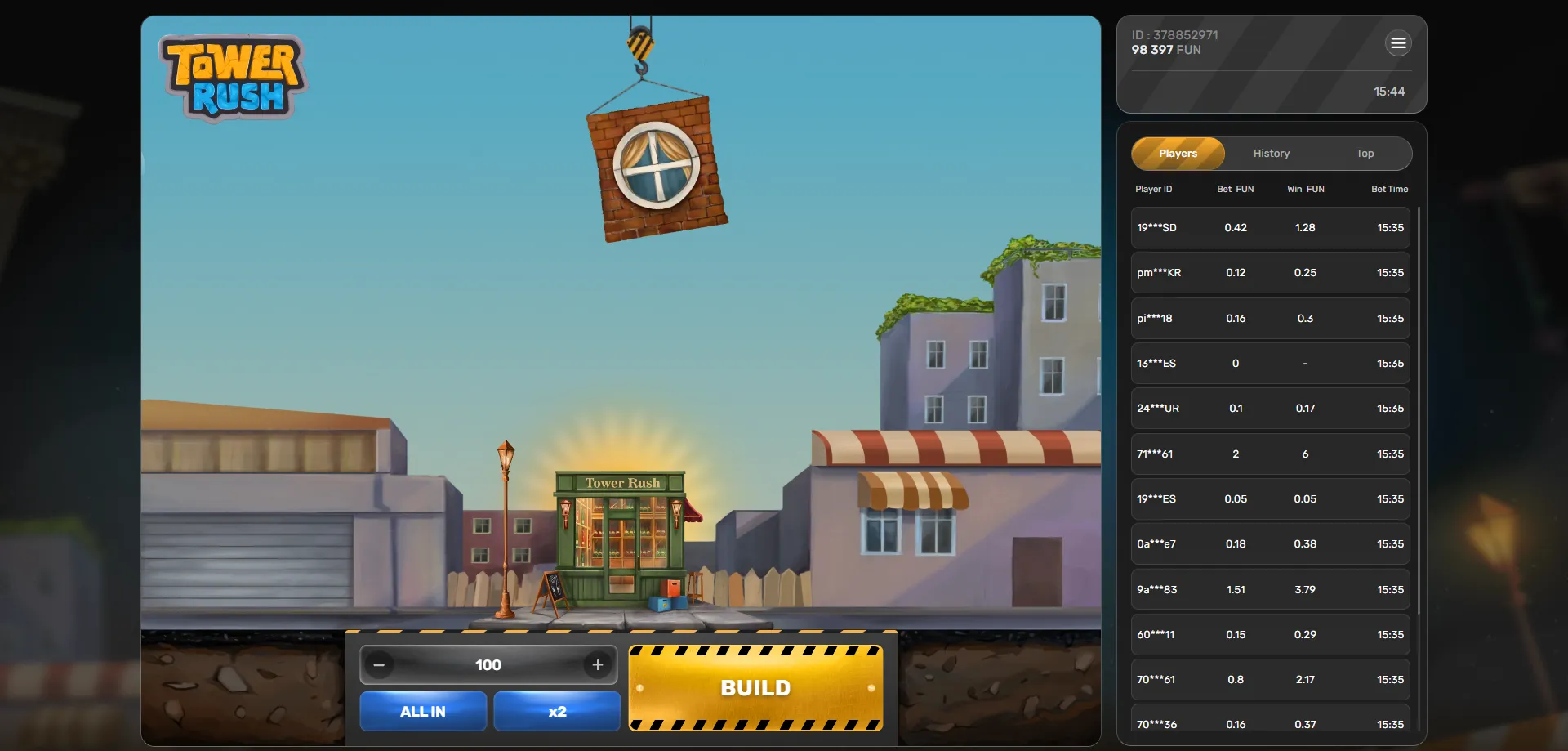
Volatility — sometimes called variance — describes the distribution pattern of wins, not just their frequency. A low-volatility game pays out small amounts very often; a high-volatility game pays out larger amounts far less often. Tower Rush is rated high volatility, which is the natural consequence of its crash mechanic: the tower can collapse at 1.01× in one round and climb past 20× in the next, with no predictable rhythm between those events.
The practical implication of high volatility is straightforward: you need a deeper bankroll relative to your stake size to absorb the variance without going bust before the big cash-out opportunity arrives. Experienced players following disciplined bankroll management typically limit individual round stakes to 1%–3% of their total session budget. At that ratio, a run of 30 consecutive early collapses — which is statistically plausible under high volatility — will not wipe out the account before a compensating win appears. Low-volatility alternatives, by contrast, would allow a larger stake-to-bankroll ratio because wins arrive more predictably, even if they are smaller in size.
In Tower Rush, the game's own mechanics signal its volatility before you place a real-money stake. The demo mode — available without registration on many platforms — shows you within a few dozen rounds how frequently the tower collapses at or below 1.5×. If you observe a high proportion of early collapses mixed with occasional long climbs, that pattern is the visual fingerprint of high volatility. The provably fair history log also lets you scroll through previous crash points, giving you an empirical distribution rather than a theoretical label. Neither of these sources predicts the next round, but they confirm the volatility character of the game you are entering.
RTP and volatility do not operate independently — they create a combination profile that suits different types of players and different objectives. Understanding where Tower Rush sits in that matrix helps you decide whether it aligns with your current session goals or whether you should look elsewhere.
A game with high RTP and low volatility is the classic choice for players who want to extend session time, clear a wagering requirement efficiently, or simply enjoy steady entertainment without dramatic swings. The mathematical edge is low and wins arrive regularly, keeping the balance relatively stable. Tower Rush does not occupy this corner of the matrix — its high volatility makes it ill-suited for bonus wagering on a tight timeline, even though its 97% RTP is genuinely strong. If session longevity is your primary goal on Tower Rush, the answer lies not in the game's volatility rating but in strict stake sizing and the use of the auto cash-out feature set at conservative 1.5×–2× thresholds.
Tower Rush actually sits slightly outside the conventional pairing here: it combines a high RTP with high volatility, which is a rarer and arguably more player-friendly configuration. You get the mathematical efficiency of a near-97% return rate alongside the possibility of extended multiplier climbs. This makes the game attractive for players who are comfortable with frequent small losses in exchange for occasional large cash-out events. The absence of a fixed win cap — Tower Rush has no hard ceiling on the multiplier beyond what the RNG generates in a given round — adds further appeal for players targeting big swings rather than consistent income.
The table below consolidates the key statistics published for Tower Rush by Galaxsys. Use it as a quick reference before starting a session or comparing this title against other crash-format alternatives in the same lobby.
| Specification | Detail |
|---|---|
| Provider | Galaxsys |
| Game Type | Crash / Multiplier |
| Published RTP | ~97% (operator-dependent) |
| Volatility | High |
| Min Bet | Typically ₹10–₹50 (casino-specific) |
| Max Win / Teaser Payout | No fixed cap (50× cited in teaser materials) |
| Provably Fair | Yes |
| Demo Mode | Yes |
| Mobile Compatible | Android & iOS |
| Bonus Buy | Not available |
The ~97% tower rush rtp figure places this game in the above-average tier relative to the wider online casino catalogue, where the industry norm for video slots hovers near 96%. High volatility is the trade-off: the return rate is generous, but its delivery is irregular. Players comparing this against lower-RTP crash alternatives will consistently favour Tower Rush on pure mathematical grounds, provided they can tolerate the variance.
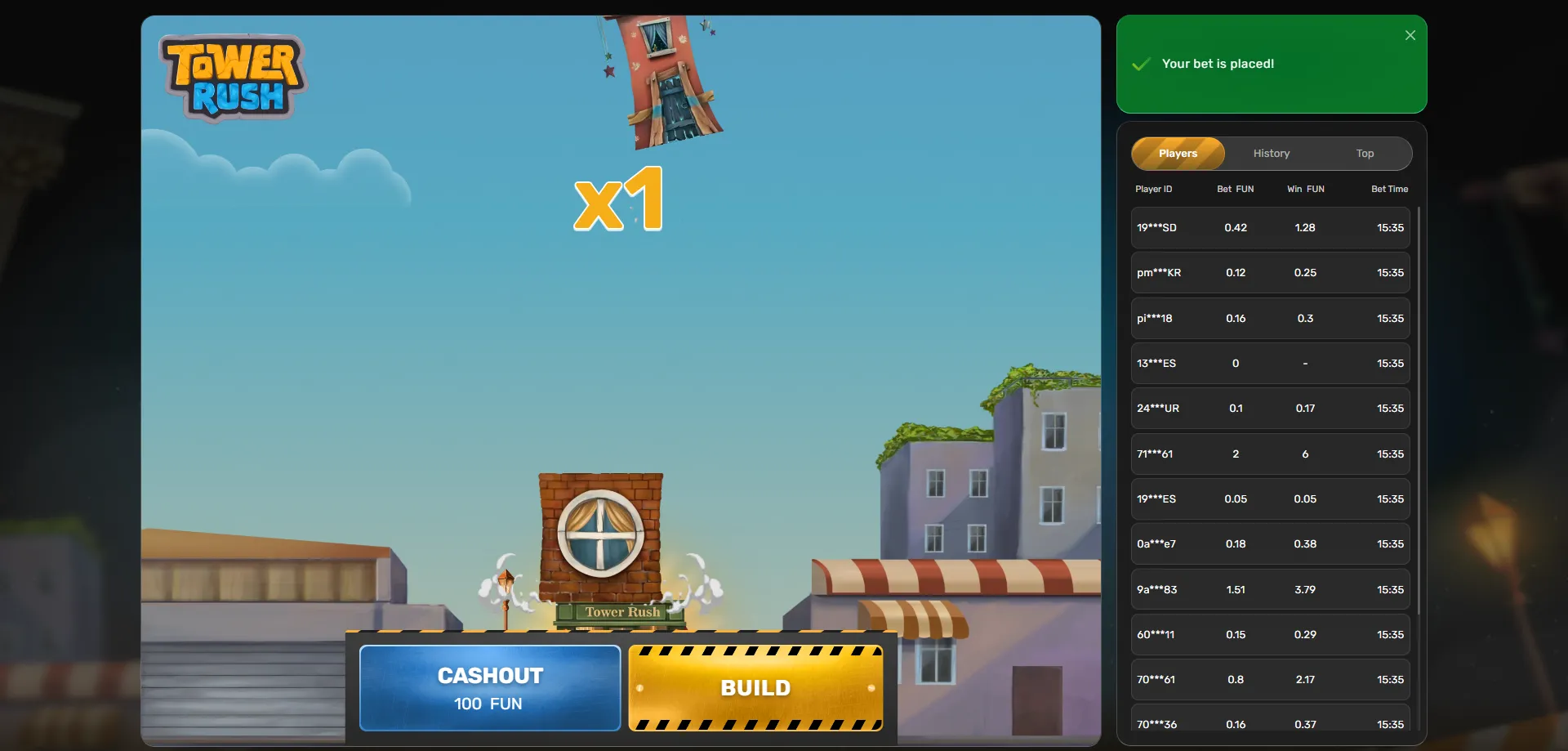
A 97% base RTP sounds compelling until you factor in a casino bonus with a wagering requirement. When you accept a deposit bonus and use it on Tower Rush, the effective RTP of your session is altered by the cost of clearing the wager. Here is the core mechanic: if a casino offers a 100% bonus up to ₹5,000 with a 35× wagering requirement, you must wager ₹5,000 × 35 = ₹175,000 before withdrawing bonus-derived winnings. Every round of that wagering cycle carries the house edge from the game's RTP — roughly 3% in Tower Rush's case. Applied to ₹175,000 of required wagering, the expected cost of clearing the bonus is approximately ₹5,250, which in this example exceeds the bonus value itself.
Galaxsys does not publish a separate reduced RTP for bonus play — Tower Rush has no traditional free-spin bonus round where alternative RTP configurations are common. The 97% figure applies to all real-money rounds regardless of funding source. However, some operators restrict crash games from contributing 100% toward bonus wagering, assigning a lower contribution rate (e.g., 10%–20%). This means your ₹100 stake on Tower Rush might only count ₹10–₹20 toward clearing the requirement, dramatically extending the total wagering needed and increasing the effective house edge on your bonus funds. Always read the bonus terms page before assuming Tower Rush is a viable wagering vehicle for a specific promotion.
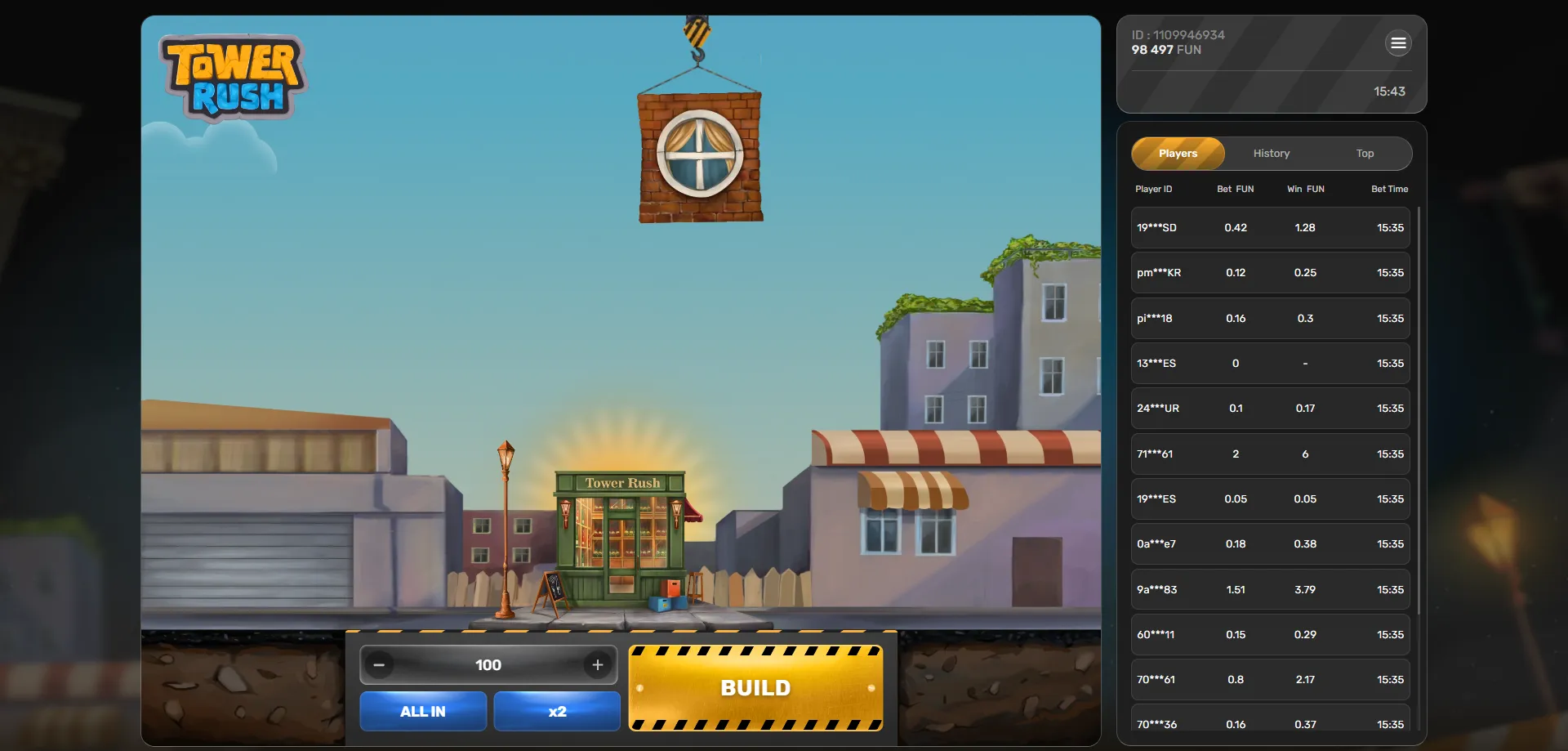
One of the most distinctive features separating Tower Rush from standard slot machines is the provably fair system embedded in every round. Before a round begins, the crash point is determined by a seed generated by the server and a seed supplied by the player's browser. After the round concludes, both seeds are revealed, allowing any player to independently run the hash function and confirm that the result was fixed before bets were placed and could not have been altered mid-round. This is not just a marketing claim — it is a cryptographic mechanism that any technically literate player can verify using publicly documented tools.
In practical terms, this means you can build a personal dataset of crash points across hundreds of rounds and compare the distribution against the expected statistical profile for a 97% RTP, high-volatility game. If crash points cluster at unusually low multipliers across a statistically significant sample, that is evidence worth investigating. In practice, the provably fair architecture makes such manipulation impossible without detection. The demo mode provides a secondary verification tool: run several hundred free rounds and compare the distribution of outcomes against your real-money sessions to satisfy yourself that the RTP holds across both modes.
Even experienced players make predictable errors when interpreting RTP and volatility data. The most frequent mistake is treating a session-level result as evidence that the game's RTP has changed. If you lose ten consecutive rounds in Tower Rush because the tower collapsed below 1.5× each time, that is not evidence of a 60% RTP — it is the expected output of a high-volatility engine over a small sample. The second common error is chasing losses by increasing stake size after a run of early collapses, on the assumption that a high-multiplier round is statistically overdue. Tower Rush rounds are independent events; the RNG has no memory, and a string of early crashes does not increase the probability of a long climb on the next round.
A third mistake involves ignoring the operator-level RTP variation. The published ~97% figure can vary slightly depending on which casino hosts the game. Some operators configure Galaxsys titles at marginally lower return rates within the range the developer permits. Checking the specific RTP displayed in the game's information panel at your chosen casino — rather than relying solely on the developer's headline figure — takes thirty seconds and ensures you are working with accurate numbers for that platform.
If you want a simple decision framework for 2026, here it is. First, confirm the RTP in the game's info panel at your specific casino — look for the ~97% figure. If it is materially lower, weigh whether the platform's bonuses compensate. Second, assess your bankroll: divide your session budget by 50 to get a stake size that gives you meaningful exposure to the variance without risking a bust in the first fifteen minutes. Third, decide on a cash-out strategy before the first round — either a conservative auto cash-out at 1.5×–2× for steady small returns, or a higher manual target if you are chasing a significant multiplier and can absorb the additional losses that approach entails. Fourth, use the demo mode for at least 20 rounds to calibrate the feel of the game's pacing before switching to real money. That four-step process takes under 30 seconds to run through mentally and sets the conditions for every session on Tower Rush to be informed rather than impulsive.
For a deeper dive into applying these principles in practice, the /strategy page covers specific Tower Rush tips and risk management frameworks in detail. If you want to revisit the core mechanics before experimenting with stake sizing, the /rules page explains exactly how the crash format operates. And if you are still deciding whether this title deserves a place in your regular rotation, the full /review covers the complete picture including operator options, payment methods, and player feedback.
Sign up now to receive an exclusive boost on your first deposit. Play Tower Rush with double the power!
🎯 Play Tower Rush🔒 18+ · T&C Apply · Play Responsibly